
Trace Ionia County Former Owners by Transfer
The recorder's index supports a backward deed timeline. Start from one confirmed current deed. Log every transfer as its own row, carrying the exact legal description with you as you go. Ionia County publishes no official earliest Tapestry year, so describe coverage by source rather than inventing a cutoff.
| Transfer date | Grantor to grantee | Instrument | Reference |
|---|---|---|---|
| Newest first | Seller to present grantee | Warranty, quitclaim or fiduciary deed | Instrument or book/page |
| Prior transfer | Earlier owner to later owner | Deed type as indexed | Matching legal description |
| Earlier book era | Names found in bound or filmed index | Recorded conveyance | Deed book and page |
Online and courthouse indexes from the recorder supply the transfer records. Historic plats connect lots and blocks to the current parcel. Tax rolls and city directories can narrow occupancy dates, but neither document proves that title actually changed hands.
Convert an Ionia County Street Address First
The Register of Deeds indexes records by owner name or legal description, not by an ordinary street address. Convert the address first. The county Tax Parcel Viewer or county-linked BS&A resource gives you the PIN, owner field and legal description. Then search the recorder index with those terms. This step matters for tracing past owners. Street numbers and mailing communities can shift over time. An addition, lot, block, section or metes-and-bounds description persists, so save both the old and new references in your working timeline.
Reconstruct the Ionia County Chain Backward
Use the Tapestry EON route or a courthouse public computer to follow the chain. Names and dates narrow the search. Recording dates, document type, subdivision, lot and block all refine the results further. The goal is focus. A continuous sequence for one legal description beats every deed filed under a surname.
- Locate the latest acquisition deed with the current party as grantee.
- Copy the grantor, date, deed type, legal description and reference.
- Search that grantor as grantee in an earlier date range.
- Repeat through the online index, then move to the correct deed book or microfilm index.
- Grantor and grantee
- The transferring and receiving parties named in an instrument.
- Chain of title
- The ordered run of conveyances affecting the same land.
- Reverse index
- An index organized around the party who conveyed an interest.
- Legal description
- The lot/block, section or metes-and-bounds language that follows the land.
Use Ionia Additions and Plat Names as Anchors
Old subdivision vocabulary can repair a broken address trail. Ionia records name the Original Plat, Merritt & York's Addition, Ingalls Addition, Mills Addition, Supervisor Voelker's Addition and other additions. Downtown legal-description material also lists C. Lovell's Addition, Baldies Addition and Supervisor Hutchins Addition. Check those references against the plat.
Search the addition together with lot and block, then compare the recorded plat to the current PIN. Portland offers Supervisor Linebaugh's Addition and River's Edge records. Belding contributes mill and Belrockton names. Each landmark is only a lead. A name becomes useful once it is tied to a parcel and instrument.
Note: Preserve punctuation and try name variants, since old indexes may abbreviate an addition or spell a party differently from modern records.
Probate and Estate Records Can Bridge a Gap
A death can move land through a fiduciary deed, probate order, dower proceeding, partition or license to sell. No simple purchase deed is involved. The Ionia County Probate Court and the Archives of Michigan county guide supply context when the chain shifts from an individual to heirs, an estate or a personal representative. Mine the case file for authority, dates and property terms. Then return to the Register of Deeds for the recorded land instrument. A death record can date a lead. An obituary works the same way. Neither document shows that title passed on that particular date.
Newspapers and Directories Date Use, Not Ownership
The Library of Michigan Ionia newspaper holdings span titles from Ionia, Belding, Portland, Lyons and other communities. Directories and atlases help too. Old newspapers reveal names. A business, resident, street label or building description can unlock an older deed search. Treat each hit as a clue. Date the transfer from the deed. A newspaper's first or last mention says nothing about when title passed, and the Ionia County Historical Society's images and documents play the same supporting role for an older building name.
When the Online Ionia County Trail Stops
No oldest online deed year is stated. The official trail continues in person at the Register of Deeds public computers. Staff there can help with location. Mail requests also work. Send names, a date range and the legal description, or turn to county plat books, patent references and the Archives of Michigan finding aid for earlier context. A gap can get stubborn. For a complex break, an attorney or title professional can judge whether the assembled chain is complete, and the Ionia County deed records guide explains copy and certification routes.
Ionia County Newspaper Holdings Can Restore a Name
The official Library of Michigan holdings table is shown below.
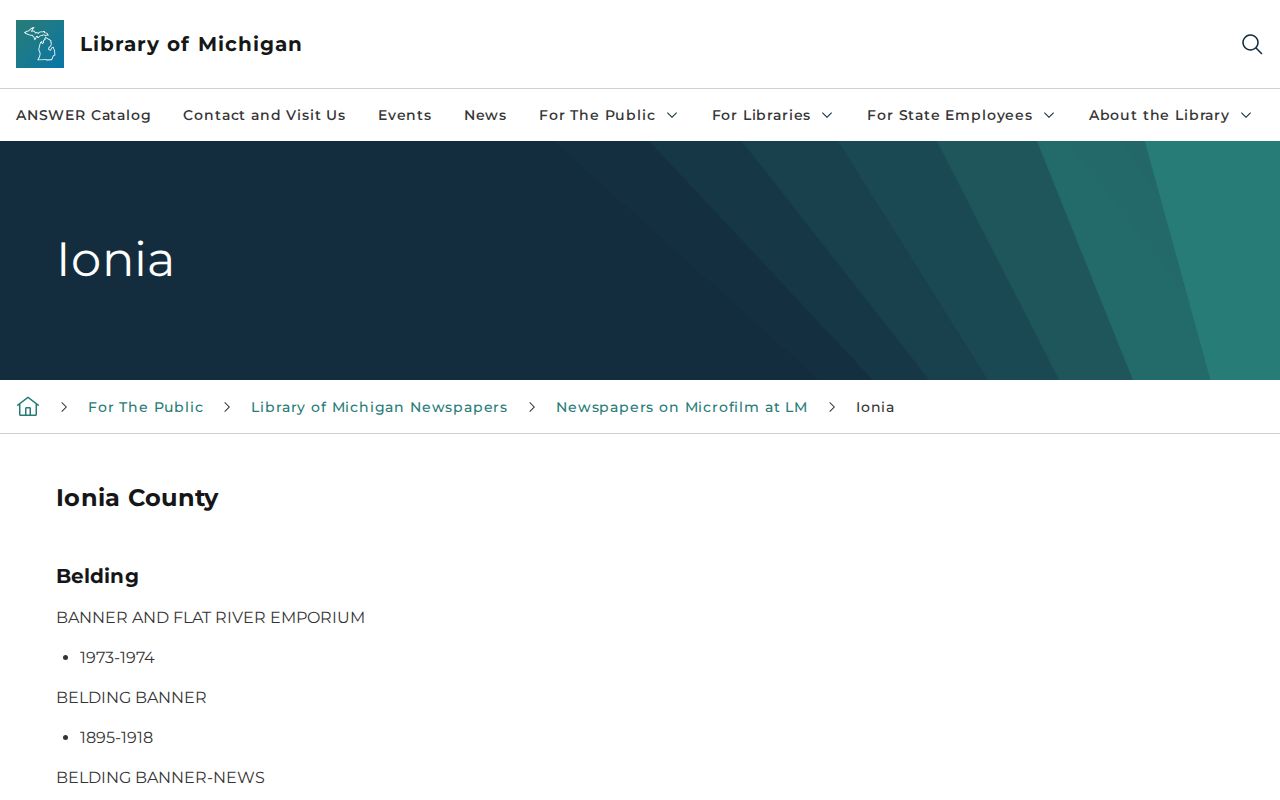
The date-and-title inventory helps you pick a newspaper once the likely community and era are known. Any former owner found there still needs a matching deed.
Audit Each Ionia County Ownership Link
A strong chain proves more than a list of names. Each Ionia County transfer deserves the same audit. Write down the execution date, the recording date, the instrument type, and the recorder reference. Note the grantor, the grantee, and the full legal description every time. Comparing the whole description beats trusting a shared surname or a street that looks close. Acreage, lot numbers, or section terms may shift. Pause and check for a parcel split, a combination, an easement, or a corrective deed. Then move further back through the deed records.
Ownership and use are different things. A mailing address in another town proves nothing about who held title. A business at the site proves nothing either. Nor does a name in a directory. Trusts, estates, and entities can make the indexed party differ from the name you expected. The owner of record may not be obvious at all. If a link stays shaky, mark it as a gap. Ask the Register of Deeds which index or cross-reference settles it.
How Deep Ionia County Ownership History Runs
Ionia County took shape in the nineteenth century. Early patents and plats push a property search deep. So can deed-book entries. These sources reach back well before modern parcel numbering existed. Even so, no fixed online cutoff applies to every title. The honest answer depends on the date and on the right index series. It also depends on whether probate, court, or plat records explain a given transfer. Log the source and its date beside every former owner you list. Where a break stays unsolved, leave it marked. Do not bridge the gap with a guess.
Lawful use. Research former owners for title work, house history, estate questions and property diligence. Never use public names or addresses to track, target or harass a person.